Seems like my last blog entry was missing something important at the very bottom.
You can now contact me at bilboed AT gmail DOT com or bilboed AT bilboed DOT com . All mail going to the fluendo address will most likely go to /dev/null .
Seems like my last blog entry was missing something important at the very bottom.
You can now contact me at bilboed AT gmail DOT com or bilboed AT bilboed DOT com . All mail going to the fluendo address will most likely go to /dev/null .
You have no idea how many times people have asked me that question. And every single time the answer was “We’re adding features gradually making sure it keeps stable every step of the way. We still don’t have the basic editing features.”. The we in that sentence is for “PiTiVi team”, which was me alone until now apart from a few outside patch contributors who will get their overdue’d beers at GUADEC 2007.
Author: bilboed
Date: Sat May 1 10:48:55 2004 UTC (3 years, 2 months ago)
Log Message: Initial revision
The first 6 months were done outside of CVS and without filling in the ChangeLog appropriately (that has changed since, don’t worry). So yes, it has been in fact 3 years and 8 months since PiTiVi was first hacked on.
December 2003 – March 2005
We didn’t take into account that we were students, had different views and motivations on that project, etc…March 2005 – June 2007
Well guess what : NO LONGER !!!! For teasers, I give you a screenshot of the triming features in PiTiVi where I can change the start/stop position of a clip used in a timeline :
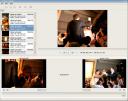
How did this happen ? Well thanks to the awesome work Brandon Lewis, the SoC student working on PiTiVi, has been doing on creating widgets, I was able to link up everything within one day… and voila
It still has some rough edges, but we’re working on doing a preview release by GUADEC. Lots of other stuff are in the bag for the SoC : effects, transitions, picture support, project file save/load, ….
Post-Edit : All this work is available in the PITIVI_SOC_2007 branch of PiTiVI for those wondering.
By now, you might have guessed that bribing/paying/drunken-ing me is not the way you’re going to get that feature faster. The only way that is going to happen… is by having more contributors ! If you’re good at UI designing, writing widgets, with gtk-python …. send a mail to the mailing list and we can start sharing the workload of what’s left to do to create the killer video editor. There are some low hanging fruits that can be solved if you’re comfortable with gtk-python, and some challenging features if you’re comfortable with gst-python and editing concepts.
Grab me or Brandon at GUADEC for a chat if you’re interested. I’ll also most certainly setup again a GStreamer hackfest as we did last year, so if you feel like having a hands-on experience, join the fun !
Nothing much to say about that currently, more in the coming weeks. What a blast it was though… but times are different, things have changed at Fluendo… and we’ll see where the wind blows this time
The FOSDEM weekend went down great as usual. Met the usual folks, and many more new people. Alway refreshing to put a face and personality behind a IRC nick
The talk I gave on “GStreamer: What’s New?” was well received. I had a hard time in fact both reducing the talk to fit in the limit of 45 mins and keeping it not too technical, but it seems to have paid off. The slides are available here in OOo format.
As I mentioned during my talk, we’ve been working hard on making GStreamer work on other platforms, including Windows and MacOSX. We’d love to receive more feedback on their usage, especially from MacOSX users/developers. If you want to give a ride, install fink and either use the available package (although they’re a bit old now) or compile your own GStreamer from releases or cvs. BTW, if a fink maintainer sees this post, updates to the existing GStreamer packages would be nice
The native MacOSX video sink is coming on nicely… but sometimes you hit some wall, like NSAutoReleasePool (objective C explicit garbage collector) not being able to work across multiple threads, which makes it impossible to avoid some warnings about objects leaking. In GStreamer plugins your entry points (pad functions, element methods, …) can be called from different threads, and you shouldn’t have to care about which thread it is (well you need to protect data that can be called by different threads with locks, but you get the drill), but with ObjectiveC you apparently need to create one of those pools for each new thread… tricky since I’m not the creator of those threads, they’re created outside of the scope of my plugin. If an ObjectiveC guru knows the trick, I’m dying to know it.
A New year, and plenty of surprises…First of all, hello to Planet GNOME and thanks to Jeff for adding me. Quick presentation for those who don’t know me. I’m the author of the PiTiVi video editor, maintainer of the python bindings for GStreamer, the GStreamer GNonLin plugins (used by PiTiVi and Jokosher) and the ffmpeg GStreamer plugins. I’ve been hacking on GStreamer ever since I started PiTiVi, wanting to fix issues at the lowest level instead of making yet-another pile-of-hacks application, and I carry on doing so by debugging and implementing new features in GStreamer core. Not only do I spent a lot of time doing all this hacking during my free time , I am lucky enough to also be able to do so as part of the consulting department of Barcelona-based Fluendo along with a great team of hackers.
What can you expect on my blog ? Mostly insights on PiTiVi and GStreamer development, my views about GNOME, FOSS and the world of today and also sometimes ramblings about French cheese not being weapons of mass destruction.
Good news ! PiTiVi 0.10.2 was released 2 weeks ago, with a truckload of bugfixes. Tests, bug-reports or comments are more than welcome. I’m currently working on the editing interface for the simple timeline with the goal of being able to *finally* show some real editing at FOSDEM.
So yes, I’m going to FOSDEM, where I will be giving a talk about what’s new in GStreamer and what’s currently being developed under the hood. This talk will happen in the GNOME developer room. If you want to see what niceties are coming round the corner, come along !
Finally, hacking and having a real life is not always that easy, so LOTS of love to Emma, my girlfriend, who’s been an angel for the past 7 years, and whose birthday it is today.
Spent yesterday and today doing the last cleanups in GstDataQueue, the multiqueue element and decodebin2. Mostly adding documentation, making sure the API of GstDataQueue satisfies all future requirements, etc…
… and finally commited it to gstreamer and gst-plugins-base ! So you can either grab cvs and start testing it, or wait for the 0.10.11 releases for those two modules, which should happen next week.
On a side note, Colin, a friend of mine with whom I graduated last year, is now working part-time for the Elisa team at Fluendo ! And today he also released his first album, go check it out on his website.
Last week, I went over to Recife, Brazil, to give a advanced GStreamer training course to the INDT folks. Despite it being the first training I ever gave (I already did several lectures and practical courses, but nothing this intensive), it was IMHO a real success. First of all, because of the attendees who were ALL extremely motivated and interested by the subject, asking the smart questions, digging deeper and deeper. Satisfying their thirst of knowledge was the other rewarding part. I discovered I knew more about GStreamer than I thought, and I deeply enjoyed transferring that knowledge.
I staid at Andre’s place during that week, and it of course involved lots of going out, drinking, and yes even a hackfest ! All in all it was excellent. I’m looking forward to going back there, for work or for leasure. You can see some photos from the trip here
Anyway, I’m now back in colder Barcelona, and after a little personal review the decision was made to concentrate myself more on PiTiVi and direct GStreamer hacking. Don’t expect me to be as reactive as I was before to fixing bugs in various plugins or gst-python, it won’t happen until I get PiTiVi to a stage where you can do editing, namely cutting, resizing and moving around sources as you can see in the UI Mockups. I think it’s better both for all the end-users who’ve been waiting so long, and also as being a more productive Fluendo employee (Being paid to work on PiTiVi doesn’t come for free, but it’s a price I’m willing to pay).
Last of last, for the past 2 days I’ve been going over decodebin2 even more, fixing some last issues, testing its behaviour with the gst-media-test against current decodebin and it’s now performing as well, takes less memory, and doesn’t leak any memory. So expect it to land in cvs tomorrow. I’ll also patch playbin so that you can use playbin with decodebin2 if you have the proper environment variable set. Unfortunately, in the long run playbin is going to have to be modified/rewritten in order to benefit from some new features that decodebin2 proposes… which might be a good thing considering playbin hasn’t changed much in the port to 0.10, and it might be time for a clean rewrite.
Over 6 months ago I got a 20Mbit/s ADSL2+ connection with ya.com here in Spain. Of course you never get 20Mbit/s with those connection but I got a nice 15Mbit/s. Perfect for getting something immediatly, watching HQ streams without bothering about somebody else using the net in the house, etc… All in all, I was really pleased about it…
…until a month or two ago, where starting from 6pm the speed drops down to 512kbit/s (if I’m lucky) with very high ping. Of course that is the time where I want to watch some streams to chill out, maybe do some work from home… GRRR
After further investigation, it’s caused by my DSLAM server being saturated at those times. And by looking on spanish user forums, I’m far from being the only one with a saturated DSLAM.
So my question is : How long are those ISPs going to carry on with all that saturation without doing anything ? Switching ISP is not an option, since it will be using the same DSLAMs except if I switch to Telefonica (state operator) which has its own DSLAMs… at 150euros a month for the same connection (yes, that’s 6 times more than what I’m paying).
Calling doesn’t seem to change anything (except for being charged 30mins of wait on a premium number). Was there anybody in the same situation ? What did you do to pressure the ISPs to add DSLAMs in saturated regions ?
Christian blogged some time ago about me working on decodebin2. And it’s finally landed in bugzilla for your reviewing pleasure.
You will need the following 3 patches:
The next step, apart from testing decodebin2 even more, is to scrape out all the cruft in playbin which is not needed anymore with this new design (queuing, audio switching, chained oggs, ….). Feedback is welcome as usual.
Yes, I’m still alive, kicking and well. I can’t believe the last post is from 1 year ago
Lots of stuff has been happening, too much for a blog entry.
Working at Fluendo is rocking as usual, lots of stuff happening. I am now the maintainer for gst-python, gnonlin and gst-ffmpeg. The later being a total pain in the *ss to maintain (ever tried supporting a library that constantly changes API and ABI, doesn’t make releases, … ?).
I’m about to go and give an advanced GStreamer training course for one of our biggest clients in a couple of weeks. It’s very challenging to go and explain first-hand how you can make the most of GStreamer for advanced issues, like using the base classes, proper use of time and newsegments, qos, … This should grow the number of knowledgeable GStreamer hackers nicely. More about who it was for and what they’re doing after I’ve done the course.
Event though I have not been hacking directly on PiTiVi for a while, a lot has been happening that makes it even better. Thanks to all the feedback from the Jokosher team and their use of GNonLin, a lot of bugfixing/enhancements are making GNonLin rock-solid. All the bugfixing gone into GStreamer core and the various plugins also means PiTiVi can use a LOT more files than it could 6 months ago, and can render in even more formats.
A few weeks ago, I spent a few days with Christophe, the new Fluendo graphist, thinking about the simple UI, what was needed, how people would use it, … and we came up with some good design ideas for the simple mode (a-la iMovie). The huge svg file is here , but I’ll post it soon on the wiki split up in smaller pictures with the ideas behind it. All efforts are now concentrated on making the simple UI solid as a rock !
We finally got fed up with Emma about our previous flat, and got a new one. We’ve now got the last floor of a building in the middle of Barcelona. 75sq meters, with two terrasses and fully furnished. Making barbecues whenever you want, in the middle of a city just plainly ROCKS
I also finally bought a projector and a living-room computer to go with it. I’m looking forward to use Elisa with it (til then it’s terminal and keyboard).
Emma is finally working full time at the French School in Barcelona as a kindergarten assistant. Very demanding, but she loves it. Only problem is that we can’t take our holidays whenever we want, and it means paying outrageous prices for plane trips (on average, 4 times more than leaving outside of school holidays, even when you book 3 months ahead !).
Flumotion/PiTiVi
Just after my last commit, having managed to get gnonlin to work, I was really looking forward to hacking on PiTiVi… but we had more important priorities at Fluendo. Eventually, after doing Flumotion testing and implementing a looper component for Flumotion (something not many streaming servers out there have apparently), I was finally able yesterday to get back to PiTiVi hacking… and it works
As i expected, a lot of the code in PiTiVi involved gst-0.8 hacks. So after scraping a lot away in the Discoverer and the Playground, importing files is now fully functionnal (with thumbnails) and way faster than with 0.8
I also re-enabled the SimpleTimelineView and adjusted the Timeline interface for the new gnonlin elements. There’s still more code scraping to do, thanks to the higher-level GnlFileSource, and testing for seeking, querying, etc…
Gstreamer Media TestSuite
I hacked a bit on the avi demuxer and gst-ffmpeg in order to have segment seeking working… but after testing it on some files, I realized some fixes made other files break. Therefore, time to make a media testsuite for GStreamer that will enable developpers to figure out what goes wrong with the various files, the common problems, etc…
We have some 15gb of files (over 1700!) at Fluendo (from MPlayer, Xine testsuite, some files Ronald collected, …) which should be enough to start with.
I’ve started a wikipage with the ideas here. Everybody is welcome to add their ideas and comments. I’ve already started implementing parts of it and I will carry on this weekend.
Life
Emma’s been working at the French primary school for a week, doing a replacement, and she really enjoyed it. She’ll be doing some more replacement next week. There might be a position opening in January… touch wood.
Been going out a lot recently… need to slow down a bit, it’s starting to get a bit too expensive. But it’s hard to say no to going out
Next wednesday, Emma and I are going to see Emir Kusturica & the No Smoking Band, really looking forward to it (Rindji Dindji Bubamara…).
Bad Behavior has blocked 19 access attempts in the last 7 days.